Your favorite thing about redstone: how versatile it is you can build entire computers in a plethora of dirffent ways.
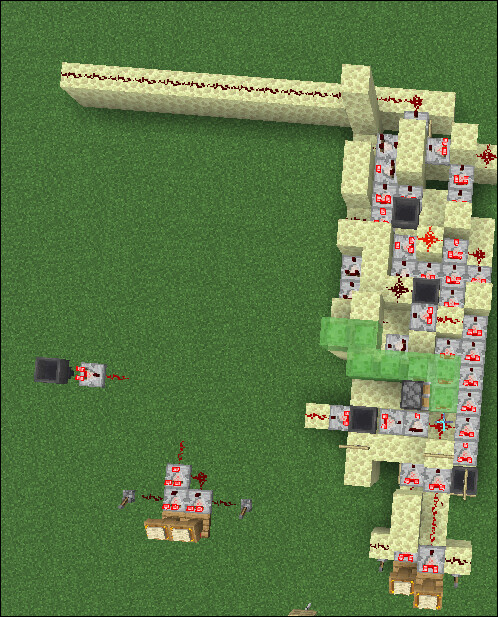
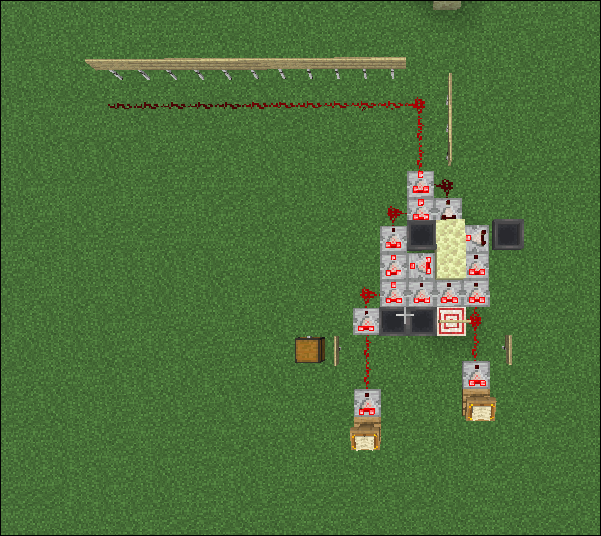
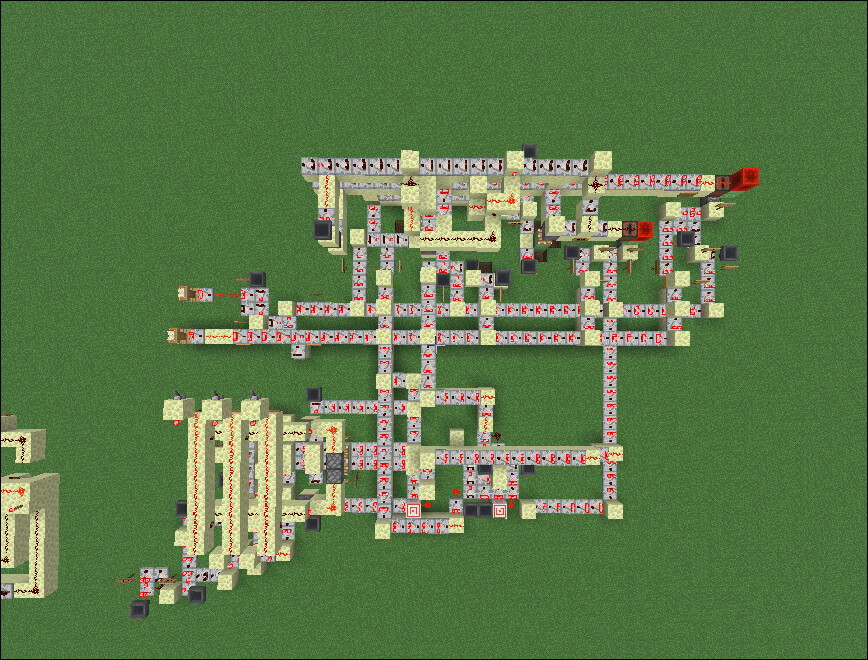
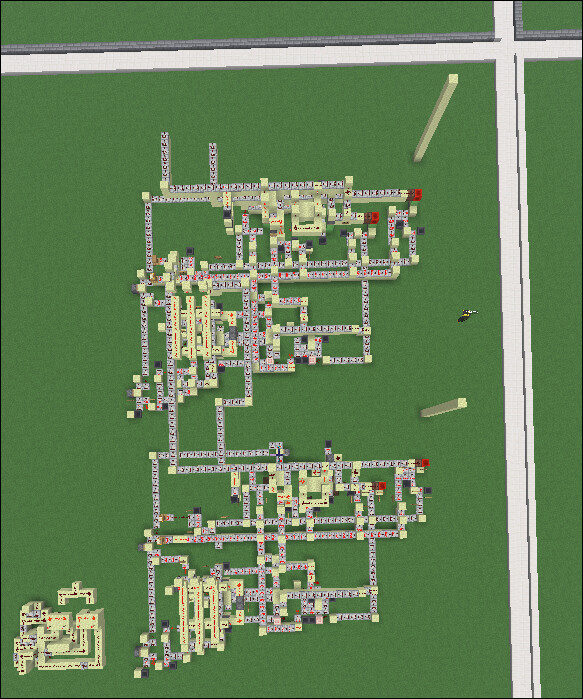
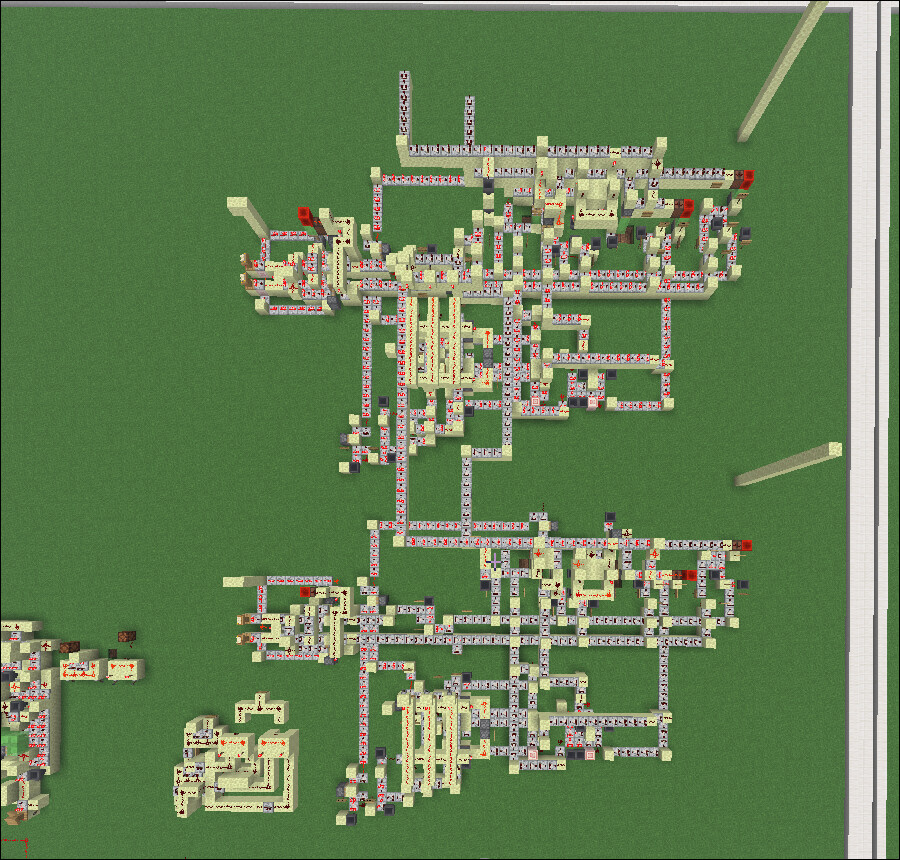
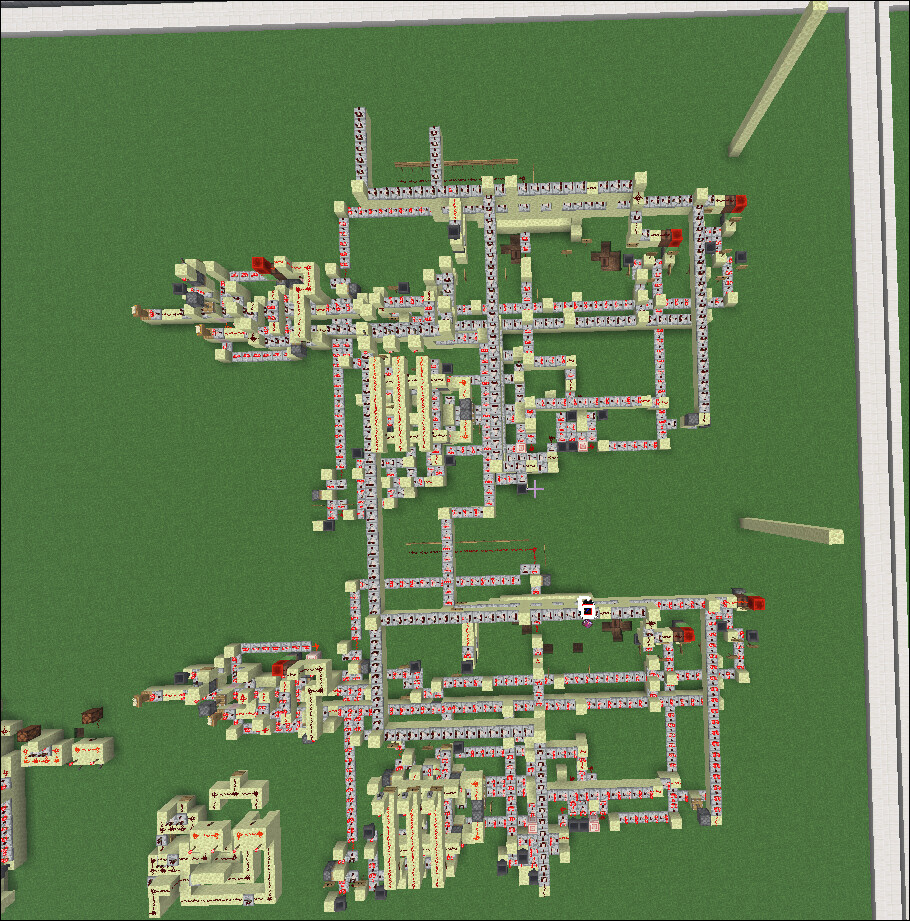
A build you have made which demonstrates redstone knowledge (This is your trial build): a Balanced Pentadecimal ALU (no bitwise operations because uhh bits dont exist for it) it accepts values from -7 (0) to +7 (14) and adds/ subtracts them (note on the MUX: due to how signal strengths work we need 2 circuits ive tried to get a formula to work wich does not clip or muddle the results without a mux multiple times, however i have not suceeded in this endeavor)
Explain what your build does in detail: mathematically it does 14-(14-b)-(a-7) (for addition) or b-(7-a) (for subtraction) it automagically switches between these to operations when it detects that the subtraction circuit is clipping to a signal strenght of 0
Completed by lag145 in 4m52.392s on 1/31/2026, 15:23 UTC.
92.59% accuracy with 2/27 answers given incorrectly.
2a019ee5-ef44-4c75-998e-6cc2aa48dc39-6c6167313435
1p4s6x2w0l1t4d151a2821601t3q42551y375k6uml2gic76ml2golt6
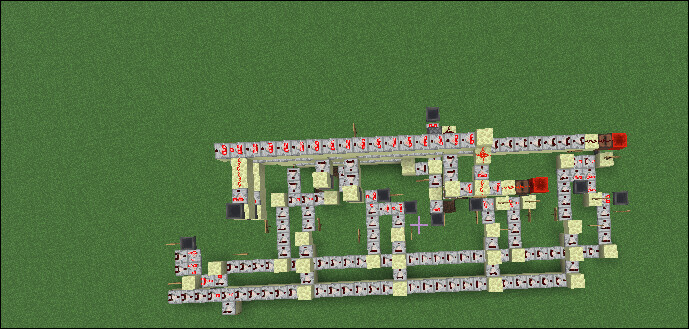
This version does basicallly the same thing as all of the other ones but checks if it over/underflows and borrows/carrys to the next stage it achives the borrow / carry correction by changing the local REF_DEFAULT. idk if you have more questions either a look at the signs or b: just ask me
i was told to say why this is the best number system it isnt but its the most meh for how compact you can build it per range
Does the ALU perform any bitwise operations or is it just an adder-subtractor? Also technically our requirement is usually 4 bits, but I think I’d be willing to round up slightly in this case if it otherwise meets the requirements.
had problematic cases in case there was neither a carry or a borrow to fix this i glued an alu that didnt have this behavior to it to fix it as for its range its range is N pents where N is the amout of times it has been stacked and the carry/borrow lines connected bitwise operations are sadly impossible due to it being pents based
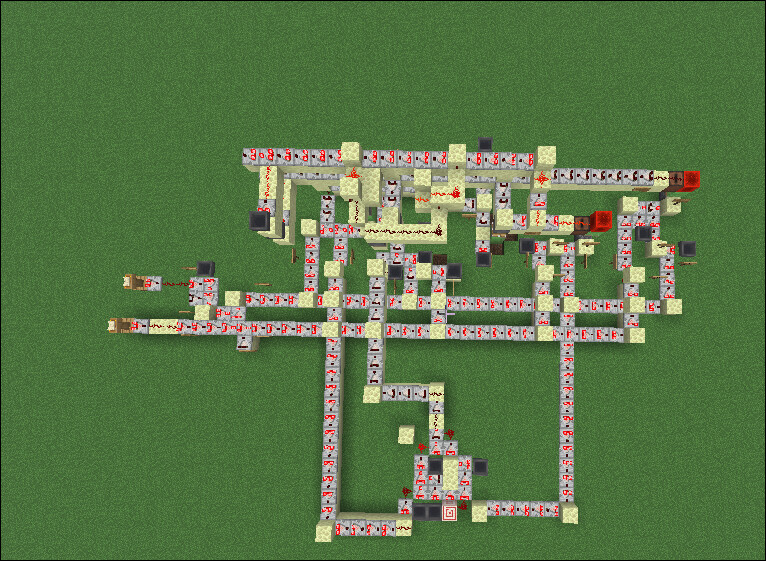
it does everything all the previous versions did but it now also supports AND, OR, XOR, and NOT and thier inverses.if you want bitwise operations on 4 bits stack it 4 times
It is quite special indeed. But in terms of functionality/scalability, we would like a requirement of 2 digits of this pentadecimal adder including the ability to choose between add/subtract. You would get questions like 7 + 7, 17 - 3 or 20 - (-2), as any other adder would. up to you to decide if you want to include the logic, as it does add quite a lot of additional stuff to build.
Yeah i think the deviation from 2s comp makes it harder to tell where its either good engineering or simply overengineered. (its also the bit of hex bussing that takes the cake)
this specific version? overengineered. the second submission good engineering the third one decent engineeering needs compacting but afterwards its just overengineering trying to add things to it wich it just never was imagined to do. however i will go to sleep now
well, some confusion is from you wanting to call it an alu (so a logic component being part of it). however being able to use bitwise on 2 “digits” only is harder to check for validity. but expect no further requirements from us. Do try to make some mockup additions subtractions like the examples i gave to check for problems.
Yeah I think I may have just found an error in my mind. Note to self: check if on Floating reference=0 if one of the numbers is larger than the other we hit the floor.
Tiiiiiiny issue I’ve been made aware of: uh as it is RN every possible value has like 3 possibilities this isn’t really a mathematical issue though as such it’s fine I say